Science News
 American
Science News for 30 September 2014
American
Science News for 30 September 2014
Ebola Outbreak 2014: Mobile Health Labs Arrive In Liberia From US
IBTimes - 30 Sep 2014 18:34
Two portable Ebola testing labs have arrived in Liberia from the U.S. and should be operational this week, according to a statement from the U.S. embassy in Monrovia, the country's capital.
Dolphins are attracted to magnets
e! Science News - 30 Sep 2014 04:41
Add dolphins to the list of magnetosensitive animals, French researchers say. Dolphins are indeed sensitive to magnetic stimuli, as they behave differently when swimming near magnetized objects. So says Dorothee Kremers ...
How Many Lakes on Earth? Researchers Finally Know
Live Science - 30 Sep 2014 01:07 With high-resolution satellite data and supercomputers to check every cloudless pixel, researchers now have the best count yet of lakes on Earth.
Half of Earth's Wildlife Lost Since 1970, Report Finds
Live Science - 30 Sep 2014 23:03 The number of mammals, birds, reptiles, amphibians and fish on Earth dropped by 52 percent from 1970 to 2010, according to the World Wildlife Fund's newly released Living Planet Report.
Popular Supplement Is Culprit in Itchy Rash
Live Science - 30 Sep 2014 22:10 A man in California developed an itchy rash over his face, torso, abdomen and scalp that turned out to be a side effect of taking a popular supplement called kava kava, according to a new report of the case.
NASA Drone Flies Over Hurricane | Video
Live Science - 30 Sep 2014 21:38 NASA's Global Hawk drone soared above the eye of Hurricane Eduoard over the Atlantic Ocean in September 2014.
Antarctic Ice Loss Causes Dip In Earth's Gravity | Video
Live Science - 30 Sep 2014 21:34 Fluctuations in gravity can be attributed to the loss of ice in West Antarctica according to data from ESA's GOCE satellite.
Zoologger: Fickle female guppies fancy fresh faces
New Scientist - 30 Sep 2014 21:30
What happens at the fishy equivalent of a cocktail party with too many male guests?
Accelerating the fight against cancer
Symmetry Magazine - 30 Sep 2014 21:20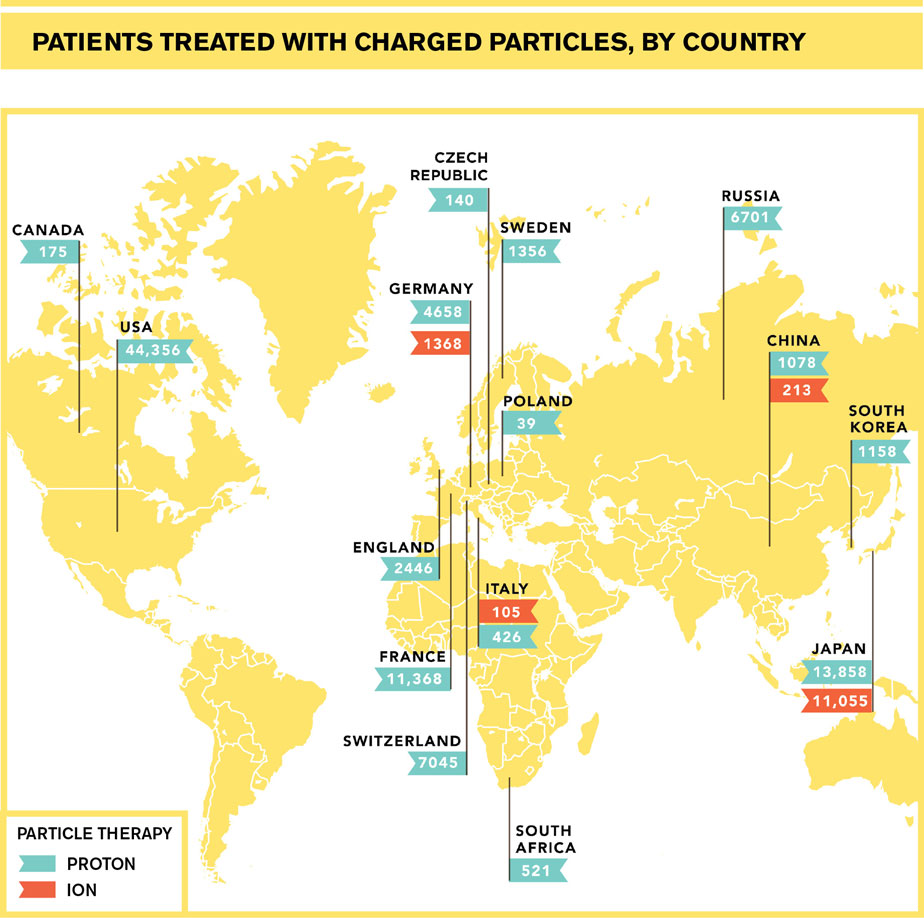 As charged-particle therapies grow in popularity, physicists are working with other experts to make them smaller, cheaper and more effective—and more available to cancer patients in the United States. Once physicists s...
Beat temptation with the marshmallow psychologist
New Scientist - 30 Sep 2014 21:00
We need willpower to resist our desire for instant gratification, but first we need to know our enemy, says Walter Mischel (full text available to subscribers)
Higgs Music: What the World's Largest Atom Smasher Sounds Like
Live Science - 30 Sep 2014 20:31
: The discovery of the Higgs boson, the particle thought to give all others their mass, was music to scientists' ears, but now the data has been turned into literal music.
How air conditioning overwhelmed its hothead haters
New Scientist - 30 Sep 2014 20:30
It was a fight between vested interests and institutional boneheadedness, but as Cool: How air conditioning changed everything explains, common sense won out
Brain Tech Projects Get $46 Million in Funding
Live Science - 30 Sep 2014 20:17 Fifty-eight brain research projects receive federal funding in the first wave of grants awarded in the BRAIN Initiative.
Rare Evolutionary Twist Morphed Dino Arms into Bird Wings
Live Science - 30 Sep 2014 20:14 When dinosaurs evolved into birds, they adapted their bones in order to take flight. Now, a new study explains how the nine bones of the dinosaur wrist turned into four bones in modern birds.
Images: A Dinosaur Wrist Transforms into a Bird Wing
Live Science - 30 Sep 2014 20:14 New research reveals how dinosaur arms evolved into the wrists of modern birds. Dinosaurs had to alter their very bone structure as they evolved to become flying birds.
Ape See, Ape Do: Chimps Learn Skills from Each Other
Live Science - 30 Sep 2014 20:01 Scientists may have recorded chimpanzees learning skills from each other in the wild for the first time, according to a new study.
Chimp social network shows how new ideas catch on
New Scientist - 30 Sep 2014 20:00
A study of how a chimp trick for drinking water spread throughout the social network is the first time social learning has been seen in wild chimps
Earth gets a new companion for trip around sun
New Scientist - 30 Sep 2014 19:30
Newly discovered asteroid 2014 OL339 is the latest member of the entourage of space rocks that temporarily join Earth in its orbit around the sun
CERN at 60: The Biggest Moments at the Famous Particle Physics Lab
Scientific American - 30 Sep 2014 19:22 Europe's particle-physics lab, made famous most recently for the discovery of the Higgs boson, turns 60 this week --
How Long Would It Take to Mine Bitcoin by Hand?
Singularity Hub - 30 Sep 2014 19:10 Bitcoin is a decentralized, digital currency. It was invented by a mysterious individual known by the handle, Satoshi Nakamoto. A bitcoin is volatile but is currently worth about $380; regulators are increasingly interes...
World's wildlife population halved in just 40 years
New Scientist - 30 Sep 2014 19:10
Populations of vertebrate species have declined by an average of 52 per cent between 1970 and 2010, and habitat destruction by people is to blame
Weird 'Island' on Saturn Moon Titan Puzzles Scientists (Video, Photos)
Live Science - 30 Sep 2014 18:54 NASA's Cassini spacecraft has spotted an odd islandlike feature in Ligeia Mare, one of Titan's largest hydrocarbon seas. Scientists don't know what to make of the structure, which covers about 100 square miles.
 Global
 Great Britain
 Indian
 South Africa